EstateViewer

A name with possibilities.

The second-look viewing sheet

The second-look viewing sheet is an observation method proposed here. It uses a fictional apartment to show how notes can become more useful when location, evidence and unresolved questions remain separate.

  1. Create four columns

    The second-look sheet has four columns: location, observation, evidence and follow-up question. Location uses a room label and a position, such as kitchen beside the rear door. Observation describes what was actually noticed. Evidence records a permitted photo reference, a measurement or a contemporaneous note. Follow-up asks for the missing information without assuming an answer. Add visit date and conditions at the top, including whether furniture limited access. Keep personal impressions in a separate margin so preferences remain visible without being mistaken for measured characteristics.
  2. A fictional apartment example

    Imagine visiting Apartment Cedar, an invented two-room example. In the living room, the observer notes that a desk-shaped cardboard outline fits beside the window, but the nearby door cannot open fully with that outline in place. The evidence is a sketch showing the door arc and the proposed desk position. The follow-up question is whether another desk position preserves the required circulation. This is more useful than writing small living room. It states the particular conflict and leaves room for a different arrangement without claiming that the apartment fails a formal standard.

  3. Resolve one question at a time

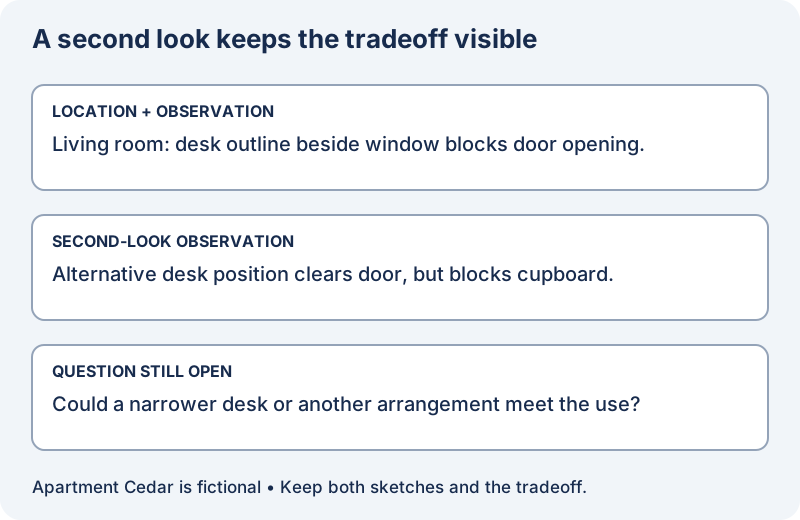
    On a second visit, check the proposed alternative position with permission and record the relevant dimensions. Suppose the fictional alternative clears the door but blocks access to a cupboard. Keep both sketches and write the tradeoff plainly instead of declaring the first concern solved. The next question becomes whether a narrower desk or a different room arrangement would meet the intended use. A worksheet can document that sequence without recommending a purchase or lease. If a question concerns structure, services or other specialist matters, the appropriate next step is qualified clarification rather than inference from the sketch.

  4. Close the record honestly

    Mark each question answered, still open or no longer relevant, and note what changed its status. An answer from another person should be attributed as an answer, not silently rewritten as something directly observed. Before sharing the record, remove unnecessary personal information and confirm permission for any photographs. The finished sheet may still contain open questions. That is a useful outcome when it accurately identifies what remains unknown and gives a future viewing a focused purpose.

A second look keeps the tradeoff visible
Illustrative reference for EstateViewer. The example is fictional. Scroll the diagram horizontally on smaller screens.